Best Welding Safety Equipment for Full Protection
Welding is a skilled trade that involves working with high temperatures, intense
light, and hazardous materials. Invest in the right welding safety equipment to
ensure your safety and prevent injuries. This article will guide you through the
essential gear you need for full protection.
Table of Contents
-
1. What PPE is Used in Welding?
-
2. OSHA Requirements for Welding PPE
-
3. The Welding Helmet – Your First Line of Defense
-
4. Protecting Your Hands – Welding Gloves
-
5. Shielding Your Body – Welding Jackets
-
6. Protecting Your Feet – Foot Protection
-
7. Additional Safety Gear
-
8. Major Safety Concerns in Welding
-
9. Maintenance of Welding Full Body Protection Equipment
-
10. Shielding Yourself with the Best Welding Safety Equipment

What PPE is Used in Welding?
Personal Protective Equipment is crucial for a welder to safeguard against the hazards associated with the welding
process. Here’s a brief overview of the essential PPE:
- Welding Helmets: Protects the eyes and face from intense light, heat, and
sparks. - Welding Gloves: Protects hands from heat, sparks, and molten metal.
- Welding Jackets: Protect the torso and arms from heat, sparks, and molten
metal. - Safety Glasses/Goggles: Worn under the helmet for additional eye
protection. - Ear Protection: Protects hearing from the loud noise generated by
welding. - Foot Protection: Safety boots with steel toe caps protect feet from
falling objects and hot debris. - Respiratory Protection: In some cases, a respirator is necessary to
protect against harmful fumes.
By consistently using the appropriate PPE, welders can significantly reduce the risk
of injuries and health problems.
OSHA Requirements for
Welding PPE
OSHA mandates specific Personal Protective Equipment (PPE) for welders to ensure
their safety. Here’s a breakdown:
Essential PPE
- Welding Helmet: This is non-negotiable. It protects your eyes and face
from intense light, ultraviolet radiation, infrared radiation, and flying
particles. - Welding Gloves: Designed to protect your hands from extreme heat, sparks,
and molten metal. Leather is a common material, but other flame-resistant
options are available. - Welding Jacket: Protects your torso and arms from heat, sparks, and
molten metal. It should be made of flame-resistant material. - Safety Glasses: Worn under the helmet for added eye protection.
- Foot Protection: Safety boots with steel toe caps are required to protect
your feet from falling objects and hot debris.
Additional PPE (Depending on Conditions)
- Ear Protection: Required in noisy environments to protect hearing.
- Respiratory Protection: Necessary when working in confined spaces or with
hazardous fumes. The type of respirator depends on the specific hazards present.
Remember: The specific PPE requirements can vary depending on the type of welding,
the work environment, and any additional hazards present. Always consult the complete OSHA
standards for detailed information.

The Welding Helmet – Your First Line of
Defense
What is the best welding helmet for beginners?
A welding helmet is undoubtedly the most critical piece of safety equipment. It
protects your eyes and faces from the intense ultraviolet and infrared radiation
emitted during the welding process. While there are manual helmets, auto-darkening helmets (ADHs) offer superior
protection and convenience.
ADHs automatically adjust the shade of the lens based on the welding arc’s intensity.
For beginners, an ADH with a good shade range (typically 9 to 13) and adjustable
sensitivity is ideal.
How to choose the right welding helmet size
A properly fitted helmet is essential for comfort and protection. Most helmets come
in various sizes; measure your head circumference to determine the correct fit. A
snug but comfortable helmet will stay in place during welding.
Can I wear glasses with a welding helmet?
Yes, you can wear glasses with a welding helmet. Many helmets are designed to
accommodate prescription safety glasses. However, contact lenses are generally not
recommended due to the risk of eye injury from sparks or debris.
Protecting Your Hands – Welding Gloves
What are the best welding gloves for beginners?
Welding gloves protect your hands from extreme heat, sparks, fire, and molten metal.
Leather is a popular choice for its durability and heat resistance. However,
para-aramid and other flame-resistant materials offer excellent protection as well.
For beginners, a pair of leather gloves with a good length (forearm coverage) and
thickness is recommended.
How do you care for welding gloves?
To prolong the life of your welding gloves, clean them regularly to remove dirt and debris. Store
them in a dry place away from heat sources. Inspect them before each use for signs
of wear and tear, such as holes or cracks.
Can I use regular gloves for welding?
No, a regular glove is not designed to withstand the extreme conditions of welding.
Using them can result in severe burns and injuries. Always wear dedicated welding gloves.
Shielding Your Body – Welding Jackets
What should a welding jacket be made of?
A welding jacket provides essential protection for your torso and arms from sparks,
heat, and molten metal. Leather is a traditional choice, but modern flame-resistant
fabrics offer excellent protection and comfort. Look for jackets with reinforced
stitching and ample ventilation.
How to choose the right size welding jacket?
A well-fitting welding jacket should for freedom of movement but provide
adequate coverage. Choose a size that fits comfortably without being too tight or
loose.
Do I need a welding jacket?
While not always mandatory, a welding jacket is highly recommended for added
protection. It can help prevent serious burns and injuries.
Protecting Your Feet – Foot Protection
What type of shoes should I wear for welding?
Safety boots are essential for foot protection while welding. Look for boots made
from flame-resistant materials with slip-resistant soles. Steel toe caps provide
added protection from falling objects.
Can I wear sneakers while welding?
No, sneakers offer no protection against the hazards of welding. Always wear safety
boots.
Additional Safety Gear
| Safety Glasses | Wear safety glasses over your welding helmet to protect your eyes from potential impact hazards. |
| Ear Plugs | Welding can produce loud noise levels, so ear plugs are essential to protect your hearing. |
| Side Shields | These extend the protection of your welding helmet to your sides. |
| Respirator | When working in confined spaces or with certain materials, a respirator may be necessary to protect against harmful fumes. |
Major Safety Concerns in Welding
Whether you weld for a living or as a trade, it presents a host of potential hazards
if not undertaken with proper precautions. Understanding these risks is crucial to
ensuring a safe working environment.
1. Exposure to Harmful Fumes and Gases
One of the most significant dangers associated with welding is exposure to harmful
fumes and gases. These can arise from the base metal, welding consumables, and the
surrounding environment. Prolonged inhalation can lead to respiratory illnesses,
metal fume fever, and even chronic health issues.
Adequate ventilation is paramount to mitigate this risk. In enclosed spaces or when
working with specific materials, respiratory protection may be necessary.
2. Eye and Face Injuries
The intense light produced during welding, often referred to as arc flash, can cause
severe eye damage, including burns and temporary or permanent blindness. Welding
helmets with appropriate shade lenses are essential to protect the eyes.
Additionally, flying sparks and molten metal can cause burns to the face, neck, and
other exposed skin. Full-face protection is often recommended, especially when
working in confined spaces.
3. Fire and Explosion Hazards
Welding generates heat and sparks, creating a fire risk. Combustible materials must
be removed from the welding area, and fire extinguishers should be readily
accessible. The use of flammable gases in welding processes increases the risk of
explosion. Proper handling and storage of these gases are crucial.
4. Electrical Hazards
Welding, including techniques like plasma cutting, involves high electrical currents,
making electric shock a significant danger. Proper grounding of equipment is
essential to prevent accidents. Damaged cables and equipment should be repaired or
replaced immediately.
5. Physical Injuries
Burns, cuts, and other physical injuries can occur due to hot metal, sharp edges, and
heavy equipment. Proper handling of materials, the use of protective gloves, and
maintaining a clean workspace can help prevent these injuries.
Addressing these safety concerns through the use of appropriate personal protective
equipment, proper ventilation, and adherence to safety protocols is essential for a
safe welding environment.
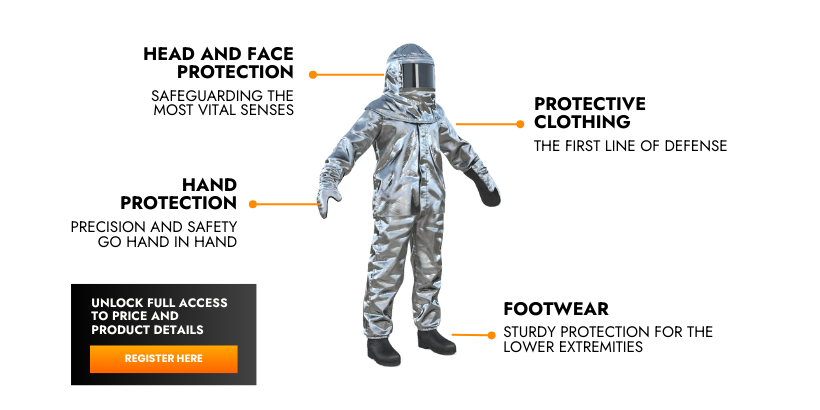
Maintenance of Welding Full
Body Protection Equipment
Proper maintenance of welding PPE is crucial to ensure its effectiveness and
longevity. Neglect can compromise safety.
| Welding Helmet | Regularly inspect the auto-darkening lens for scratches or damage. Clean the outer visor with a damp cloth to remove debris. Replace parts as needed. |
| Welding Gloves | After each use, clean gloves to remove debris and sweat. Store in a dry place to prevent mould. Inspect for wear and tear before each use. Replace gloves when they show signs of damage. |
| Welding Jacket | Regularly inspect for holes, tears, or signs of heat damage. Clean as per manufacturer’s instructions. Store in a dry, ventilated area. |
| Safety Glasses | Clean regularly with mild soap and water. Avoid harsh chemicals. Inspect for scratches or damage before use. |
| Footwear | Clean and dry safety boots after each use. Inspect soles for wear and replace if necessary. |
| Respiratory Protection | Follow the manufacturer’s cleaning and storage guidelines. Replace filters and cartridges as needed. |
Shielding Yourself with the Best Welding
Safety Equipment
Investing in high-quality welding safety equipment
is essential for protecting yourself from the hazards of welding. By wearing the
appropriate gear, following safety guidelines, and ensuring good condition of the
PPE, you can significantly reduce the risk of injuries and accidents. Remember,
safety should always be your top priority when welding.