
Construction sites combine heavy machinery, working at height, electrical systems, and ground-level hazards in close proximity. Recognizing the most common accident categories and the prevention measures that address each is the foundation of a functioning safety program.
This article covers the six leading hazard categories on construction sites, the conditions that produce each, and the prevention measures and PPE that reduce their likelihood and severity.
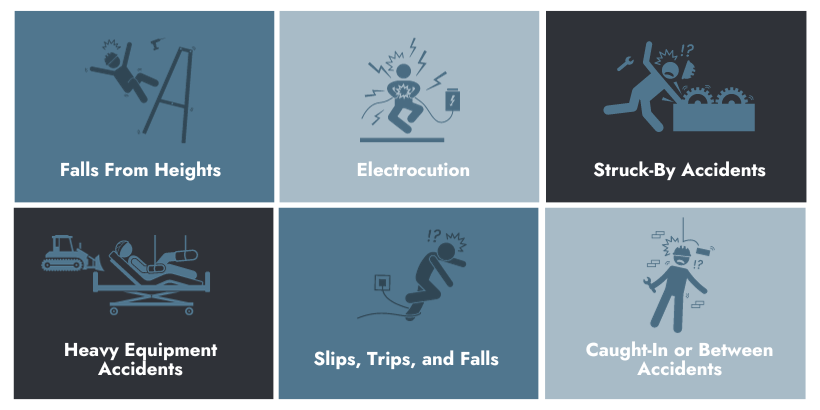
Six Construction Site Hazards
Construction sites are full of many hazards, from heavy equipment to scaffolding. Accidents can happen in a split second, and the consequences can be serious or even deadly. In order to keep your employees safe, it’s important to understand the most common types of construction site accidents and how they can be avoided.
Hazard #1: Falls From Heights
Falls are one of the most common causes of injury on construction sites. Most occur when workers are on ladders or scaffolding or working at elevation without adequate fall protection such as guardrails, safety nets, or personal fall arrest systems.
To prevent falls, employers should ensure that all ladders and scaffolding are in good condition and that all workers have received proper training before using any height-related equipment. Workers should wear appropriate fall protection gear, including a full-body harness connected to a rated anchor, and hard hats for impact protection.
Hazard #2: Electrocution
Electricity is another major hazard on construction sites. Electrocution can occur when workers come into contact with live electrical wires or equipment.
To prevent electrocution, employers should ensure that all electrical systems are properly grounded and insulated before work begins. Workers should receive training on how to safely handle electrical equipment and how to identify potential hazards such as frayed wires, exposed outlets, and damaged extension cords.
Hazard #3: Struck-By Accidents
Struck-by accidents are incidents where a worker is struck by an object, vehicle, or piece of equipment. These can lead to serious injuries or fatalities depending on the force and location of impact. Struck-by accidents are commonly attributed to poorly secured tools, falling debris, improper use of equipment, and inadequate traffic control on site.
To reduce these hazards, employers should maintain equipment properly, enforce traffic control plans, and store tools and materials securely when not in use. Hard hats should be worn by all workers on the ground around elevated work areas.
Hazard #4: Heavy Equipment Accidents
Heavy machinery is used on most construction sites for lifting and moving materials. These machines can also be hazardous if not used properly.
To prevent heavy equipment accidents, employers should provide comprehensive operator training before allowing anyone to use machinery. Equipment should be inspected regularly for signs of wear, hydraulic leaks, or damage that could lead to failure during operation.
Hazard #5: Slips, Trips, and Falls
Slips, trips, and falls at ground level are a frequent hazard due to uneven surfaces, cluttered workspaces, and weather conditions. Walkways should remain clear, wet surfaces should be marked with signs or cones, and flooring materials such as wooden planks should be secured to prevent shifting underfoot.
Hazard #6: Caught-In or Between-Accidents
Caught-in or between accidents occur when a worker becomes trapped or crushed between objects, equipment, or materials. This includes being caught in moving machinery, pinned between heavy objects, or buried by collapsing materials. These accidents often result from poor equipment maintenance, lack of worker training, or inadequate safeguards on site.
To reduce the risk, employers should inspect and maintain equipment regularly, enforce training requirements, and implement site organization practices that keep workers clear of pinch points and unstable material piles.
Types of Fall Hazards in Construction Sites
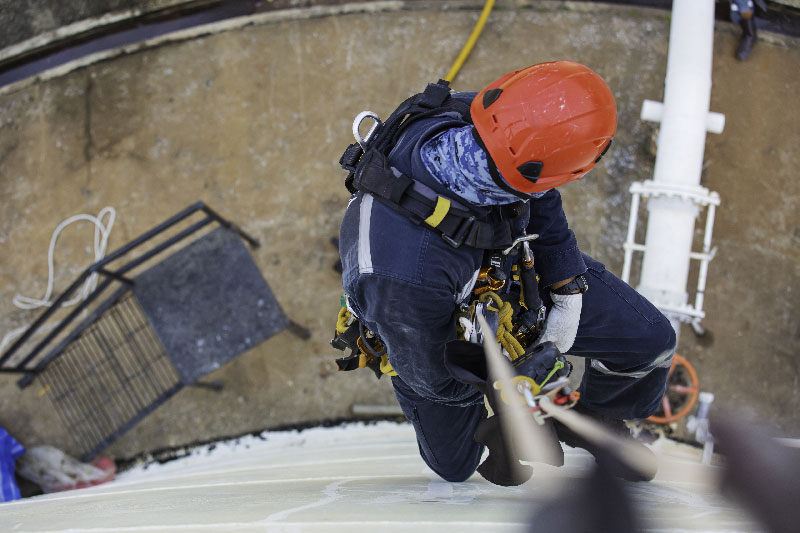
Fall hazards refer to any situation where a worker could fall from an elevated surface. Examples include scaffolding without guardrails, unstable ladders, open pits or trenches without covers, and slick surfaces caused by water or ice accumulation. The OSHA fall protection threshold for construction is generally 6 feet (1.8 m), and equivalent thresholds apply under European and other regional frameworks.
Unprotected Sides or Edges
Unprotected sides or edges are any area where no guardrail or other barrier prevents a worker from falling off the structure they are working on. This category is among the leading causes of construction fatalities.
To prevent falls due to unprotected sides or edges, employers should ensure that areas with potential drop-offs are clearly marked and that guardrails are installed where workers could be exposed. Where guardrails are not practical, workers should be tied off using a personal fall arrest system anchored to a rated point.
Leading Edge Work
“Leading edge work” refers to any situation where a worker performs tasks such as cutting concrete or metal decking at an edge with no protection below. This hazard is particularly significant because there is no support if a worker slips during the task.
To minimize leading edge hazards, employers should ensure that fall protection systems are in place before work begins. Options include guardrails, temporary flooring systems, toe boards, safety nets, and personal fall arrest. Workers should be tied off when working near unprotected edges.
Holes in Floors/Roofs
Holes in floors and roofs are particularly dangerous because they often go unnoticed until a worker has already fallen through them. Under OSHA 1926.501(b)(4), fall protection is required for holes that are 2 inches or larger in their least dimension.
To minimize this hazard, openings should be either covered with materials capable of supporting twice the maximum intended load or surrounded by guardrails. Covers should be secured against displacement and clearly marked with the word “HOLE” or “COVER.”
Skylights
Skylights can pose a fall hazard because their structural strength is often insufficient to support a worker’s weight, and they may not be obvious from a working position on the roof.
To reduce the risk, skylights should be marked clearly so their locations are known, and screens, guardrails, or skylight-rated covers should be installed where workers operate nearby.
Ladder Safety/Scaffolding Safety
Falls from ladders and scaffolding account for a significant portion of overall construction falls due to their prevalence on most projects. Ladders should be inspected before each use, secured at the top and bottom, and rated for the load and task. Scaffolds should be inspected by a competent person before each shift and after any event (weather, impact, alteration) that could affect structural integrity. Ladder rungs should be slip-resistant, and scaffolds should have guardrails on all open sides above the OSHA threshold.
Fall Prevention Measures
Falls are one of the leading causes of death and injury in construction. Implementing fall prevention measures on site is essential and, in most jurisdictions, legally required above defined height thresholds.
Personal Fall Arrest Systems (PFAS)
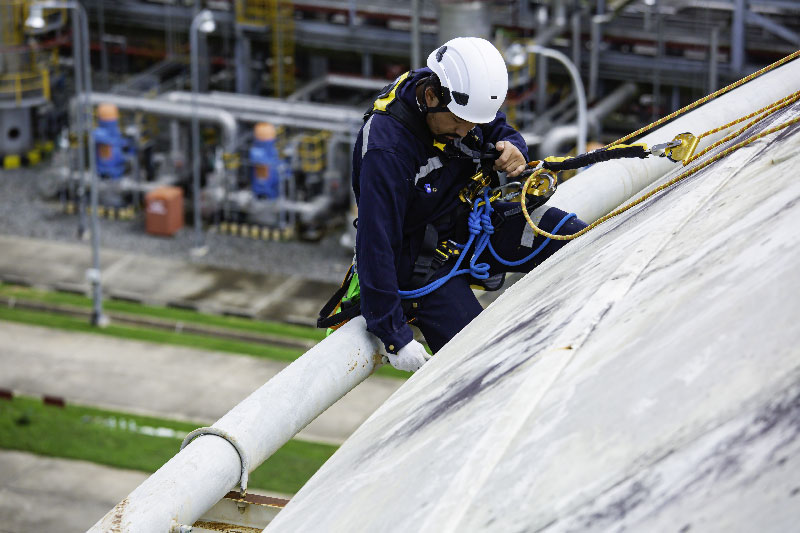
A personal fall arrest system is critical when working at heights where fall prevention through guardrails or restraint is not practical. A PFAS includes an anchorage point (a fixed structure or device rated for fall arrest loads), a full-body harness, a lanyard or self-retracting lifeline connecting the harness to the anchorage, and a shock absorber to limit the forces transmitted to the worker during a fall. The components are governed by ANSI Z359 in North America and EN 363 series standards in Europe. A PFAS catches a worker midfall and prevents impact with the ground or other surfaces.
Fall Restraint Systems
Fall restraint systems prevent workers from reaching the edge of a working surface, eliminating the fall before it can occur. The system uses a tether connecting a body harness to a fixed anchorage point, with the tether length sized so the worker physically cannot reach the fall hazard. Fall restraint is preferable to fall arrest where the work allows, because it removes the fall entirely rather than mitigating its consequences.
Safety Nets
Safety nets provide a soft landing surface for falls from heights. They are made of strong mesh designed to absorb impact and reduce injury risk. Under OSHA 1926.502(c), safety nets must be installed as close as practicable below the walking or working surface and never more than 30 feet (9.1 m) below. They should be inspected regularly for wear, tested for impact integrity after installation, and replaced when damaged.
Guardrails
Guard rails are permanent or temporary barriers along the edge of walkways and work areas. They should be constructed of steel, aluminum, or other materials capable of withstanding the loads specified in the relevant standard (200 lbs of force at the top rail under OSHA 1926.502). Top rails should be 42 inches (1.07 m) above the walking surface, with midrails at the midpoint. Inspect regularly for corrosion or damage and repair before further use.
Horizontal and Vertical Lifelines
Lifelines provide a continuous attachment point for workers moving along a structure. Horizontal lifelines run between two anchor points and allow a worker to traverse a length while remaining tied off. Vertical lifelines run from a single overhead anchor and accommodate ascent or descent. Both must be designed, installed, and inspected by qualified personnel, and the anchor points must be rated for the loads generated during fall arrest.
Anchor Points
Anchor points are the structural attachment points to which lanyards, lifelines, and harnesses connect. For fall arrest, anchor points must be capable of supporting at least 5,000 lbs (22.2 kN) per worker attached or be designed by a qualified person to maintain a safety factor of at least two. Anchor points must be installed correctly and inspected before each use to confirm they remain secure.
Beyond the Checklist
Finally, construction safety functions as a system, not a checklist. A harness without compatible anchor points fails. Anchor points without inspection fail. Inspection without training fails. Each piece of fall protection equipment is a component of a larger assembly, and the assembly only works when every component matches the others and the people using it know how.
For procurement teams kitting construction crews, the OTEPLACE construction PPE category brings harnesses, anchor hardware, helmets, and the supporting PPE together in one place.