
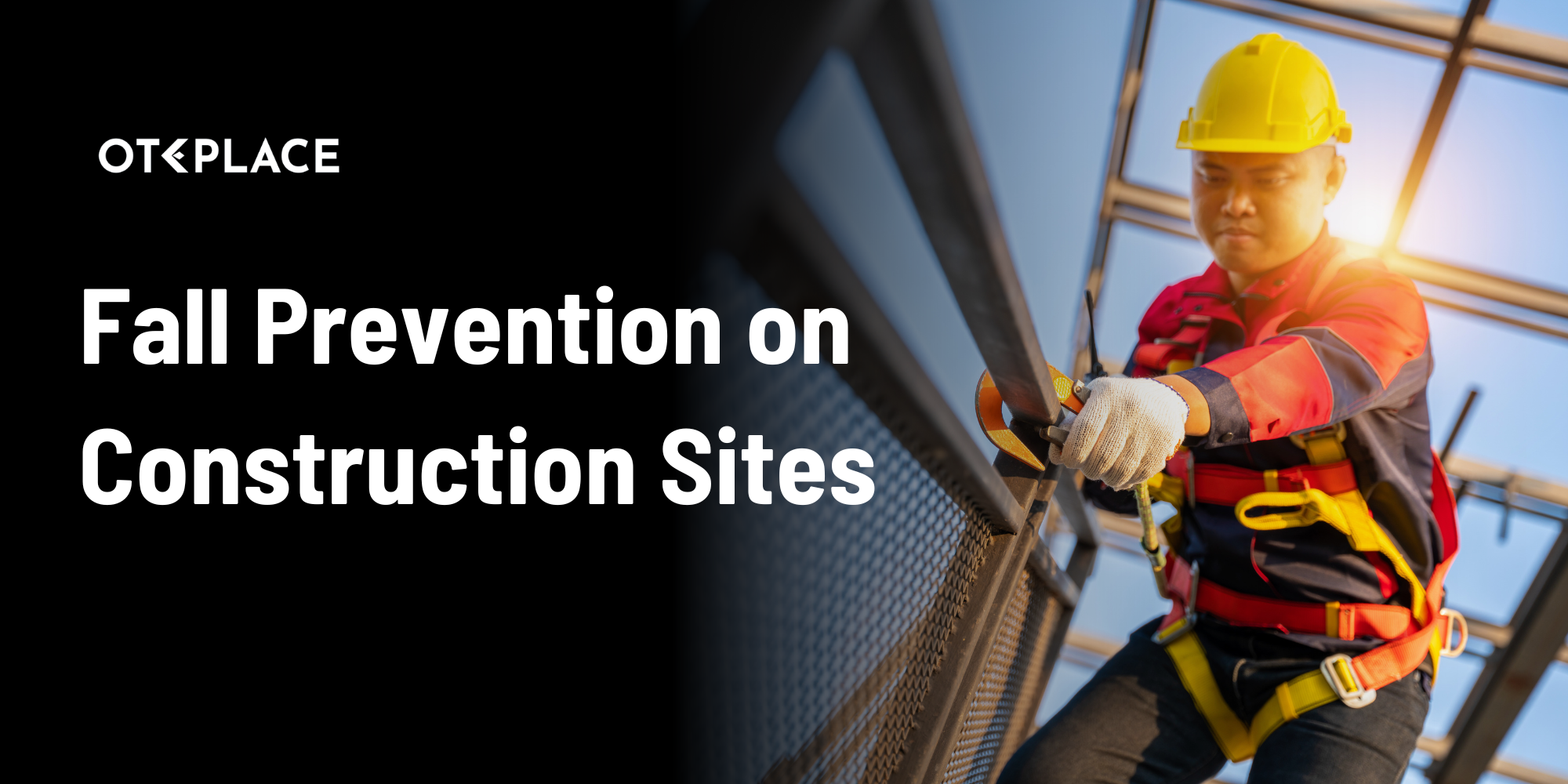
Falls are a major source of death and injury in the construction industry. According to the Occupational Safety and Health Administration (OSHA), falls from heights account for over 30% of fatal accidents in the construction sector, making them one of the leading causes of injuries at construction sites. Fortunately, there are several fall prevention measures that can be taken to ensure safety on construction sites. Let’s take a look at some of these measures and their advantages and limitations.
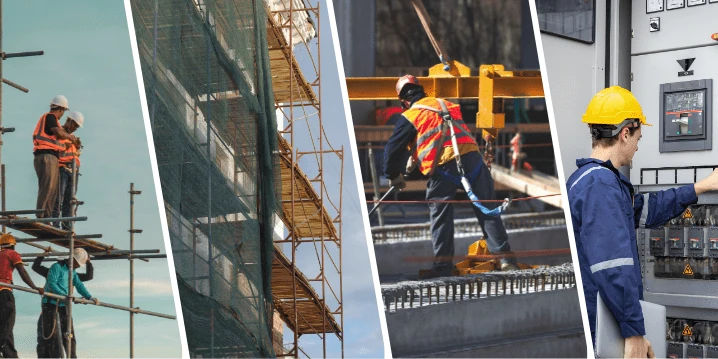
Fall Prevention Methods Used on Construction Sites
1. Guardrails
Guardrails are one of the most common fall prevention methods used on construction sites. They are designed to provide a physical barrier between workers and any potential drop-off hazards, such as edges around excavation pits, open stairwells, and elevated work platforms. OSHA 1926.502(b) specifies guardrail construction requirements, including top rail height of 42 inches and a load capacity of 200 lbs. Guardrails do not provide protection from falling objects, so hard hats remain required for workers below or near overhead hazards.
2. Safety Nets
Safety nets provide an additional layer of protection by giving workers a soft landing surface in the event of a fall. They also provide some protection from falling objects, which guardrails do not. Under OSHA 1926.502(c), nets must be installed as close as practicable below the working surface and never more than 30 feet below. Nets require regular inspection for damage and impact integrity testing after installation.
3. Personal Fall Arrest Systems
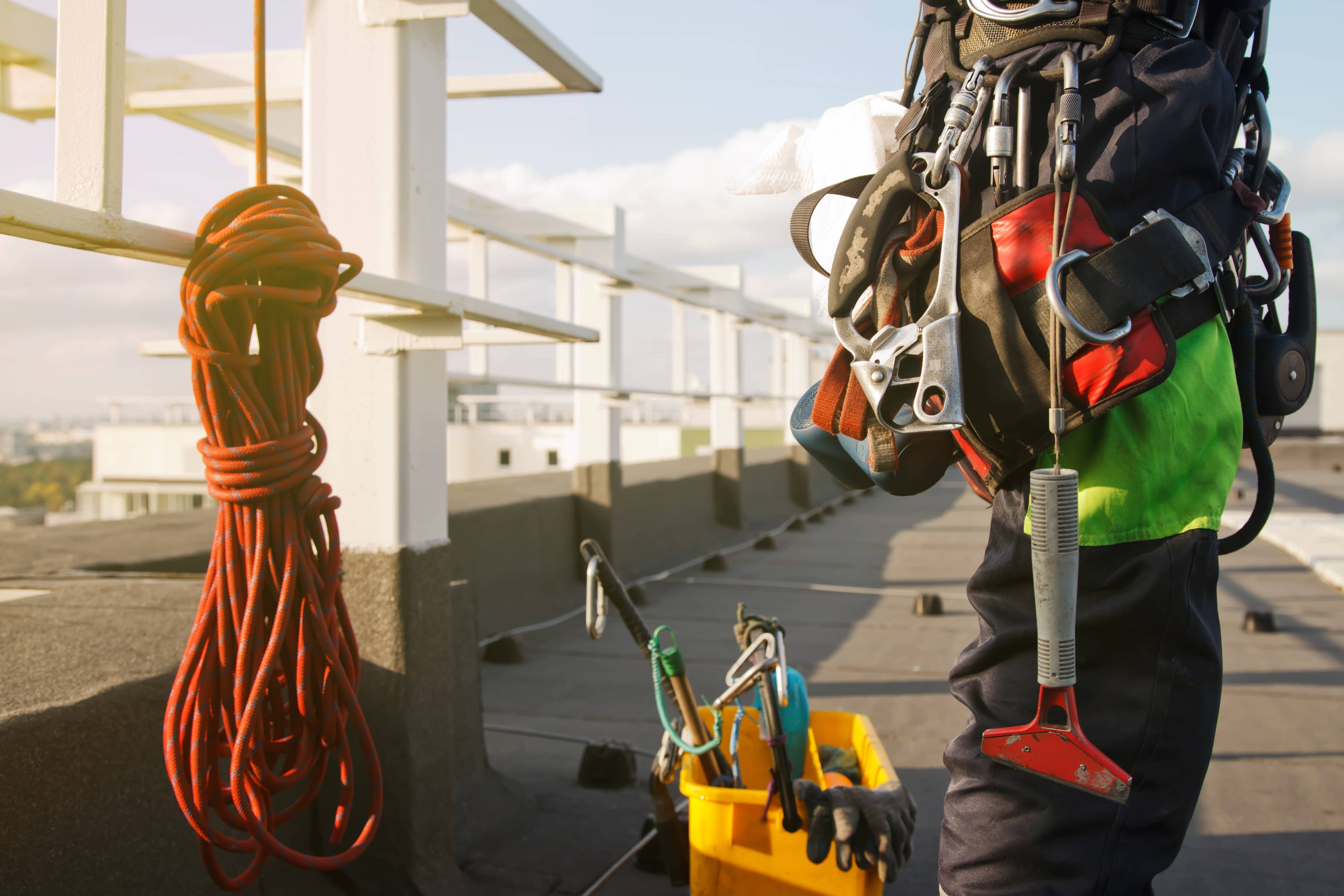
Personal fall arrest systems (PFAS) protect workers exposed to fall hazards while performing tasks at height. A PFAS consists of an anchor point rated for fall arrest loads, a full-body harness, a lanyard or self-retracting lifeline, and a shock-absorbing element. The system catches a worker mid-fall and prevents impact with the ground or other surfaces. PFAS components must be certified to ANSI Z359 in North America or EN 363 series standards in Europe, and the assembly requires frequent inspection and maintenance.
4. Safety Monitoring Systems
Safety monitoring systems under OSHA 1926.502(h) involve a designated competent person whose sole duty is to monitor the safety of workers on low-slope roofs and warn them of fall hazards. This is distinct from environmental monitoring (weather, wind speed) used for operational risk management. Safety monitoring as defined by OSHA is permitted only in specific limited circumstances and should not be treated as a substitute for engineering controls like guardrails or fall arrest where those are practicable.
Training and Education To Avoid Fall Hazards
Comprehensive Training Programs for Workers
A core step in preventing falls is the provision of comprehensive training for workers. This includes both new employee orientation and regular refresher courses for existing staff.
Training programmes should cover fall hazards specific to the site, personal protective equipment selection and use, and safe work practices. Training should be delivered in a language understood by all employees and adapted to the specific tasks each worker performs. Documented and refreshed training is also a regulatory expectation under OSHA 1926.503.
Implement Safe Work Practices
Safe work practices on the construction site should address proper ladder usage, scaffold safety, aerial lift operation, and other fall-related risk factors. Workers should be given adequate time to complete tasks without being rushed, and communication channels for reporting hazards and safety concerns should be established and used.
Proper Use of PPE
Providing workers with the appropriate PPE is essential to fall prevention. Fall protection systems such as guardrails, safety nets, and personal fall arrest systems must be installed and maintained according to the requirements of each job. Workers must be trained on inspection, use, and maintenance of their PPE so that the equipment performs as designed when called upon.
Regular Job Site Inspections
To maintain a safe work environment, regular job site inspections should assess all fall hazards, equipment condition, and work processes. Identified issues should be addressed promptly, and workers should be encouraged to report any potential fall hazards they observe between formal inspections.
Encourage a Safety Culture
Building a safety culture means encouraging workers to actively identify and address fall hazards rather than waiting for incidents to surface them. Regular recognition of safe behaviour reinforces its importance, and clear channels for raising concerns make the reporting process functional rather than nominal.
Emergency Procedures in Case of a Fall
Fall prevention is the priority, but workers must also be trained on what to do when a fall occurs. The following sequence applies after a fall incident.
1. Secure the area. Cordon off the area around the fallen worker so no one else is exposed to the same hazard. Check for hazardous materials, unstable surfaces, or active equipment that could pose additional risk to responders.
2. Assess the situation. Determine whether medical attention is needed and assess for serious injuries including broken bones, head injuries, and signs of internal trauma. Do not move the worker unless they are in immediate further danger; spinal injury cannot be ruled out without assessment.
3. Contact emergency services. Notify emergency services immediately and provide the location and condition of the injured worker. Have someone available to direct responders to the site once they arrive.
4. Administer first aid. Provide appropriate first aid such as CPR or wound care until emergency services arrive. First aid should be administered only by personnel trained to do so.
5. Follow up with employees. Once the immediate situation is resolved, support the workers involved, including those who witnessed the incident. Counselling services or time off may be appropriate depending on the severity of the event and individual needs.
PPE To Reduce Fall Hazards on Construction Sites
Hard Hats
Hard hats protect the head from falling objects, impact, and accidental contact with overhead structures. Standard construction hard hats are made from high-density polyethylene (HDPE), ABS, or fiberglass shells, and should meet ANSI Z89.1 (US) or EN 397 (Europe). Class E (electrical) rating is required where exposure to electrical hazards is possible. Inspect hard hats before each shift; cracks, dents, or UV degradation are grounds for replacement.
Safety Glasses
Safety glasses protect against flying debris, dust, and chemical splash. Lenses should be shatter-resistant polycarbonate meeting ANSI Z87.1 or EN 166. Cracked, scratched, or otherwise damaged glasses should be replaced rather than worn. Fit matters; a loose pair of glasses provides limited protection.
Harnesses
Full-body harnesses are required when working at height above 6 feet under OSHA 1926.501(b)(1). The harness should fit properly and be connected to a rated anchor point through a lanyard or self-retracting lifeline. Harnesses must be inspected before each use for signs of wear, including damaged webbing, deformed hardware, and missing labels. Equipment that fails inspection should be removed from service immediately.
Proper Use of Ladders and Scaffolding
Working at height involves regular use of ladders and scaffolding. Proper setup and use significantly reduce fall risk.
Setup Requirements
Inspect ladders and scaffolds before each use for cracks, splits in the rungs, corrosion in metal parts, and other defects that could compromise stability.
Set up ladders and scaffolds on even, firm surfaces. For extension ladders, follow the 1:4 ratio: for every four feet of height, the base of the ladder should be one foot away from the structure it leans against.
For scaffolding, a competent person must supervise assembly to confirm it meets the required safety specifications. Use base plates and mudsills for added stability, and verify that all platforms are fully planked.
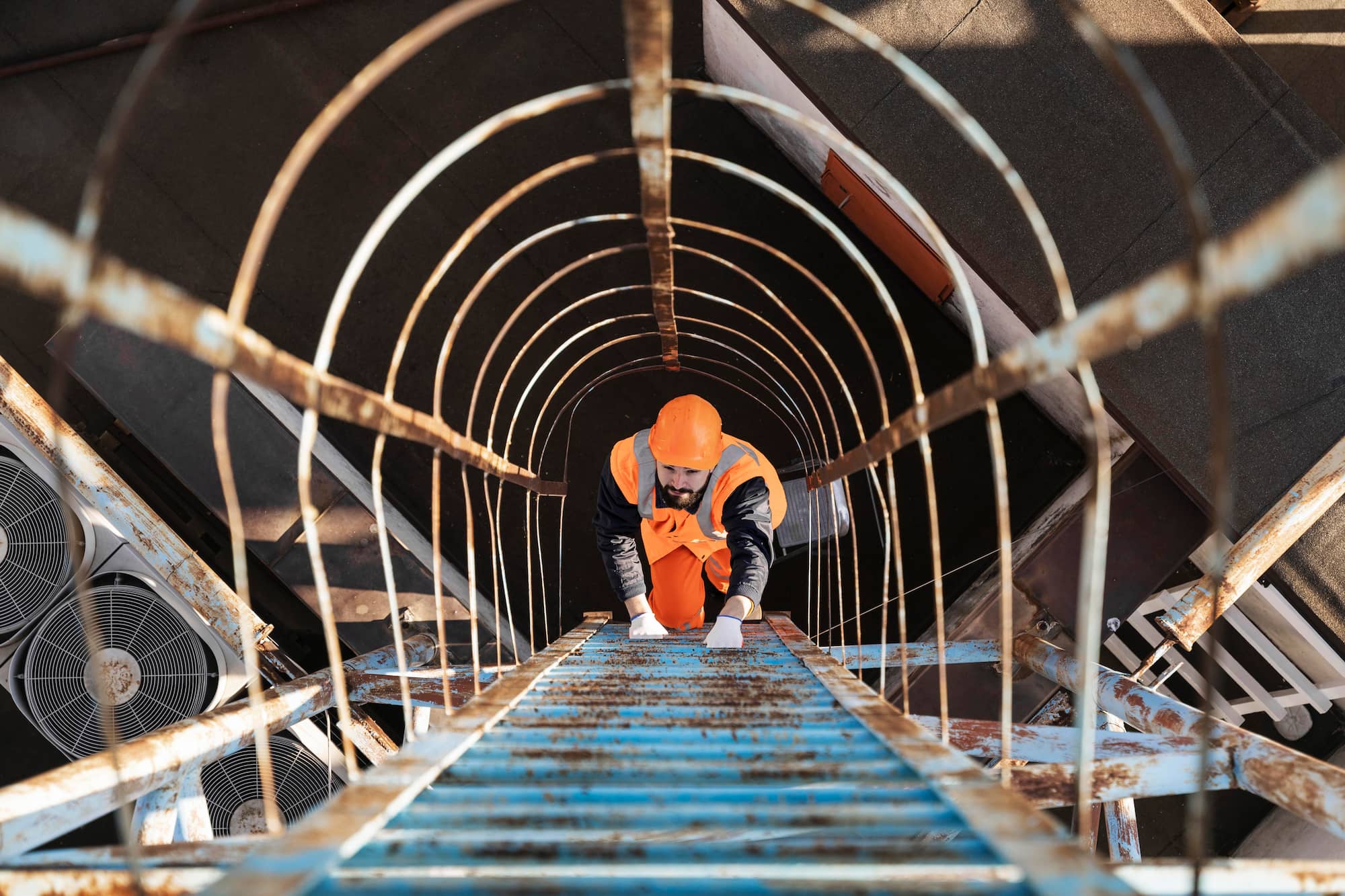
Maintain three points of contact at all times when climbing: two hands and one foot, or two feet and one hand.
Do not stand higher than the second step from the top of a stepladder, or higher than the third rung from the top of an extension ladder.
Install guardrails and toe boards on scaffolding platforms, and verify that planks are secured against displacement.
Selecting the Right Equipment
Select a ladder or scaffold suited to the task. Considerations include:
- Nature of the work: For sloped surfaces, use a ladder with adjustable legs or a scaffold design with levelling capabilities.
- Materials: For outdoor or wet conditions, avoid wooden ladders, which become slippery and degrade over time. For work near electrical hazards, use non-conductive fibreglass rather than aluminium.
- Height and reach: Choose equipment that allows workers to reach the work area without overreaching or standing on the top rungs. Scaffolding should be designed to safely accommodate the required working height.
- Load capacity: Confirm the ladder or scaffold rating matches the combined weight of the worker, tools, and materials. Light maintenance work has different requirements than brickwork or material handling.
- Standards compliance: Consult OSHA standards (1926 Subpart L for scaffolding, Subpart X for ladders) or the equivalent in the operating jurisdiction for detailed specifications.
Safe Climbing Techniques
When climbing ladders or scaffolds, take time rather than rushing. Secure footing should be confirmed before reaching for tools or materials. Avoid carrying excessive loads that could shift balance during climbing; use a tool belt, hand line, or hoist for materials where practical. Never stand or step on guardrails or other components designed for balance rather than load-bearing.
Implementing Fall Prevention on Construction Sites in Practice
Implementing fall prevention on a construction site is built from layered controls: engineering controls (guardrails, safety nets) where the environment can be modified, administrative controls (training, inspection, safe work practices) that govern how workers operate within the environment, and PPE (harnesses, hard hats) that catches workers when other controls fail. No single layer is sufficient on its own, and the cost of treating fall prevention as a checklist rather than a programme tends to show up only after an incident.