
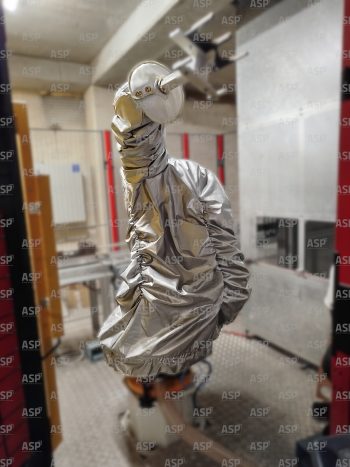
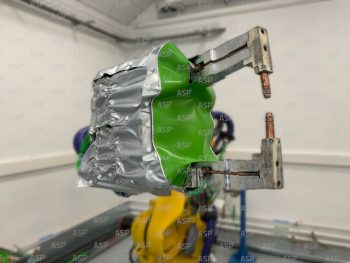
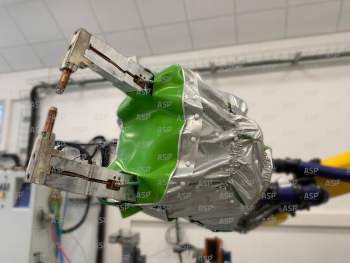
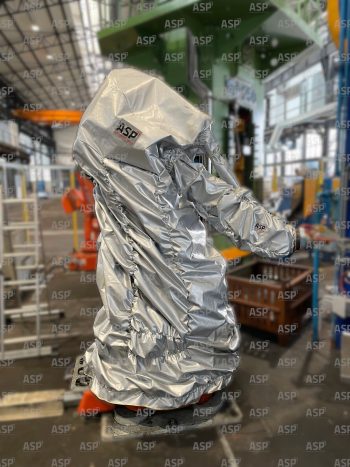
Industrial robots have become an essential part of modern manufacturing. These pieces of equipment are used for tasks such as welding, painting, material handling, and automated assembly. According to the International Federation of Robotics, global industrial robot installations surpassed 517,000 units in 2021, and continued investment in industrial automation, artificial intelligence, and robotics is expected to drive significant growth over the coming years.
However, many of these operations expose robotic equipment to challenging conditions, including high heat, dust, chemicals, moisture, and abrasive particles. Without adequate protection, these environmental hazards can impair robot performance, accelerate component wear, and cause unexpected production downtime.
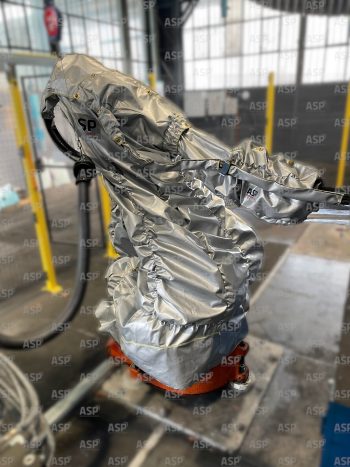
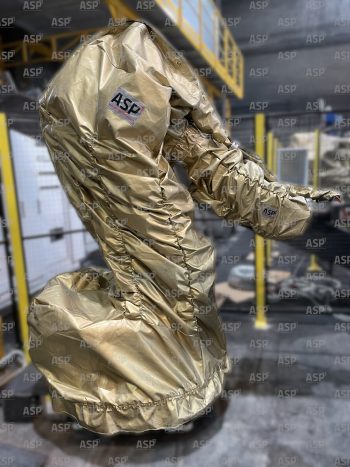
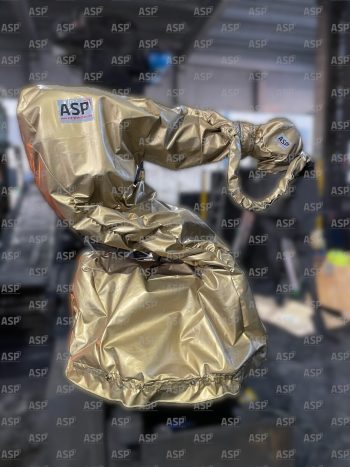
Robot covers help protect valuable robotic equipment from these risks while allowing the robot to maintain its normal range of motion. Available in different materials and configurations, these protective covers are designed to meet the requirements of specific industrial applications.
What Are Industrial Robot Covers?
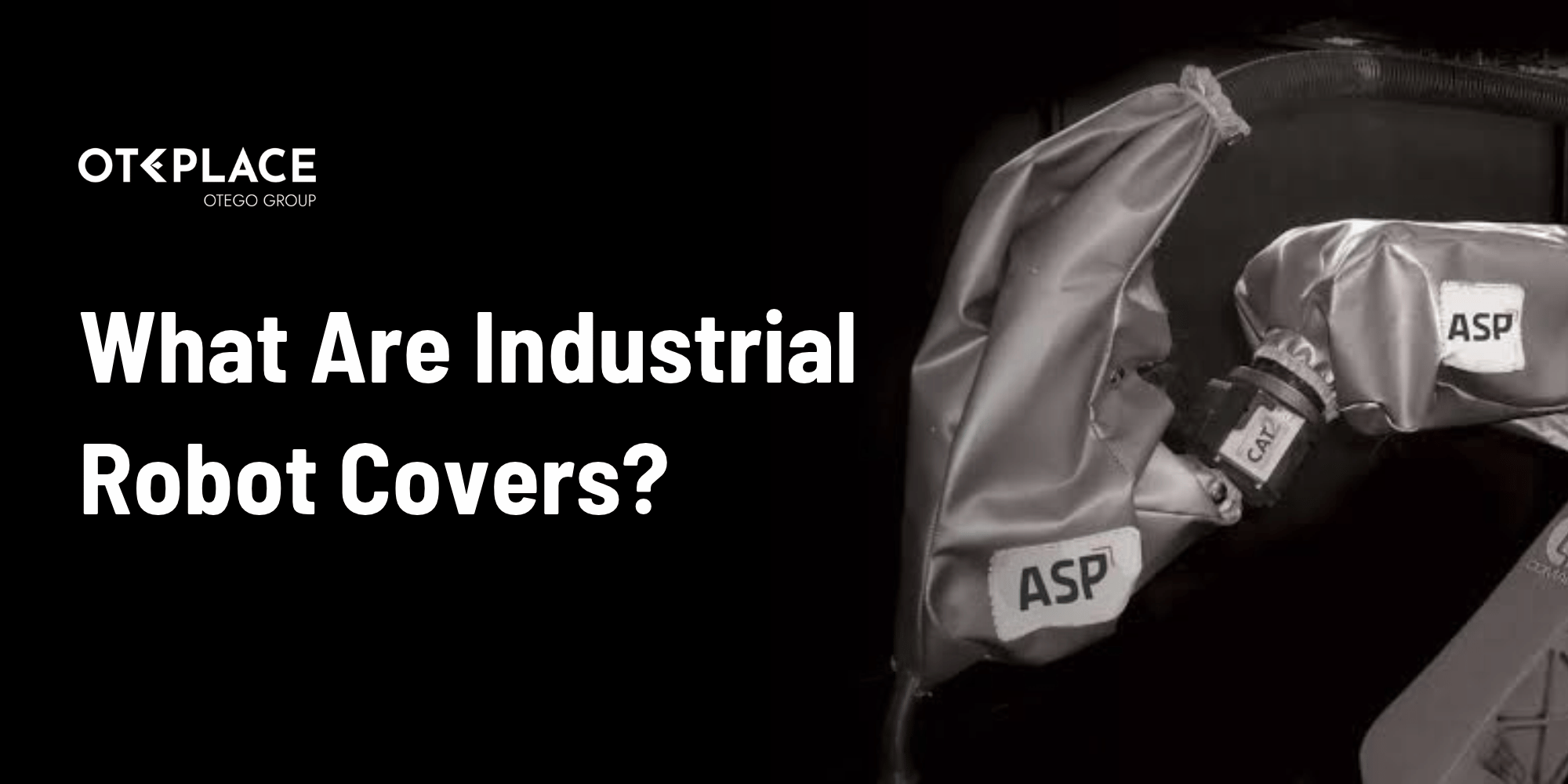
Industrial robot covers are specially engineered protective covers designed to shield an industrial robot from environmental hazards that can affect its performance and reliability. Rather than protecting operators, these covers focus on protecting the robotic equipment itself, allowing it to continue operating efficiently in demanding production environments.
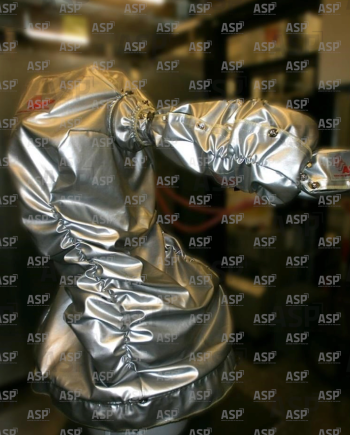
A robot cover typically encloses the robot arm and other exposed moving components without interfering with normal motion. The exact cover design depends on the robot model, its range of movement, and the environment in which it operates. Some covers provide lightweight protection against dust and moisture, while others are built for thermal protection, chemical resistance, or extreme abrasion.
The materials used also vary depending on the application. Manufacturers commonly use:
- Aramid fibers
- Silicone Coated Fiberglass
- PTFE (Teflon) Coated Fabrics
- Aluminized Fabrics
- Abrasion Resistant Coated Fabrics
- and other high-performance textiles to provide better strength and durability.
Key Benefits of Industrial Robot Covers
Robot covers offer several practical benefits for manufacturers operating automated production systems. By limiting exposure to environmental hazards, they help maintain equipment reliability and reduce the maintenance demands associated with harsh working conditions.
Reduced Downtime and Maintenance Costs
Dust, paint overspray, moisture, and other contaminants can accumulate around robotic joints, sensors, and moving mechanisms. Over time, this buildup may interfere with operation and increase maintenance requirements.
Protective covers create a barrier between the equipment and its surrounding environment, helping reduce contamination and the risk of unexpected equipment failures. This can minimize unplanned downtime and make routine cleaning and maintenance more manageable.
Extended Equipment Service Life
Industrial robots represent a significant investment, particularly in facilities where automated systems operate continuously. By limiting direct exposure to heat, chemicals, abrasive particles, and moisture, robot covers help reduce environmental wear on exposed components. Appropriate protection can contribute to longer equipment service life and lower repair or replacement costs over time.
Improved Cleaning and Maintenance Efficiency
In environments such as paint booths and food processing facilities, keeping robotic equipment clean can require considerable effort.
A properly selected cover helps prevent contaminants from accumulating directly on difficult-to-access robot surfaces. Depending on the cover material and application, maintenance teams may be able to clean or replace the protective cover more easily than cleaning the exposed robot itself. This supports more predictable maintenance schedules and helps facilities maintain production efficiency.
Types of Industrial Robot Covers
Not every production environment requires the same level of protection. The different types of robot covers available today are designed to address specific hazards while allowing robots to operate without restricting movement or reducing precision.
Heat Resistant Covers
Heat-resistant robot covers are designed for equipment operating near high-temperature processes, including welding operations, foundries, steel mills, and aluminum smelters.
These environments may expose robots to radiant heat, sparks, welding spatter, and molten metal. Without suitable thermal protection, prolonged exposure can damage cables, degrade seals, and affect exposed components.
High-performance materials such as aramid fibers, silicone-coated fiberglass, and aluminized fabrics are commonly considered for these applications. The required level of heat resistance depends on the operating temperature, duration of exposure, and whether the cover must withstand radiant heat, direct contact, or molten metal splashes.
Chemical Resistant Covers
Chemical processing facilities and petrochemical plants expose robotic equipment to aggressive substances every day. Oils, solvents, cleaning agents, and industrial chemicals can gradually degrade seals and moving parts if they come into direct contact with the robot.
Chemical-resistant fabrics create a protective barrier while maintaining flexibility, allowing the robot to complete its programmed tasks without interference.
Paint Booth Covers
Paint robots operate continuously in environments where overspray is unavoidable. Paint particles can build up on joints and moving assemblies, eventually affecting precision and increasing maintenance requirements.
Dedicated paint booth covers help keep contaminants away from critical components, making routine cleaning easier and extending equipment reliability throughout the production process.
Dust and Abrasion Covers
Dust is often underestimated, but it remains one of the common causes of premature wear in industrial automation. Mining, woodworking, machining, and sandblasting operations generate fine abrasive particles that can damage sensors and moving mechanisms.
For these applications, manufacturers often specify abrasion-resistant coated fabric that provides better strength while maintaining the robot’s full range of motion.
Food Grade and Hygienic Covers
The food industry presents completely different design requirements. Robot covers must remain airtight, waterproof, and easy to clean while meeting hygiene regulations.
Because PVC is generally prohibited in food processing applications, manufacturers typically select food-safe, chemical-resistant textiles that support washdown procedures without compromising product safety.

Common Applications Across Industries
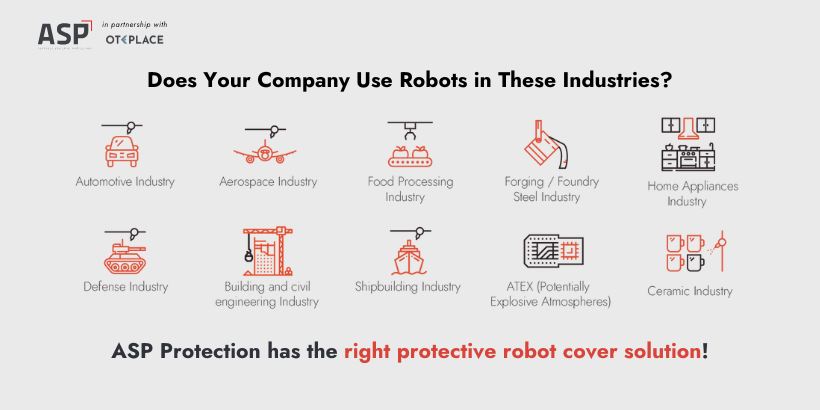
Industrial robot covers are used across a broad range of industries because every production environment presents different challenges. The exact solution depends on the robot model, the working conditions, and the hazards present at the site.
Welding and Metal Fabrication
Welding remains one of the most demanding applications for industrial robotics. Continuous exposure to welding spatter, sparks, molten metal, and radiant heat places enormous stress on robotic equipment.
High-performance textiles with excellent heat resistance help protect robots operating near welding arcs. In foundries and steel mills, reflective aluminized protection is often used to reduce thermal exposure while maintaining robot motion. Without adequate protection, high heat can damage cables, melt external components, and gradually reduce operational performance.
Automotive Paint Shops and Surface Finishing
Automotive manufacturers and other production facilities rely heavily on robots for painting and coating applications. While automation improves consistency, paint overspray presents its own maintenance challenges.
Specialized robot covers prevent paint buildup on joints, sensors, and moving surfaces. This reduces cleaning time, improves production efficiency, and helps maintain precision throughout repeated production cycles. Protected robots typically need less frequent cleaning.
Food Processing and Hygienic Manufacturing
The food industry has its own unique requirements. Robot covers used in food processing must meet strict hygiene standards while preventing contamination.
PVC materials are generally prohibited in food industry applications because of regulatory requirements. Instead, manufacturers use chemical-resistant fabrics specifically developed for hygienic environments. Covers are often designed to remain airtight and waterproof during regular washdowns while maintaining food-grade compliance.
Chemical Processing and Harsh Industrial Environments
Robots operating in chemical facilities, petrochemical plants, and pharmaceutical manufacturing environments face continuous exposure to corrosive substances.
Custom protective covers help shield robotic equipment from chemicals, moisture, oils, and airborne contaminants. Depending on the specific application, manufacturers may choose fabrics engineered for exceptional strength, chemical resistance, or better thermal stability under extreme conditions.
Mining, Machining, and Abrasive Operations
Robots used in machining, material handling, and abrasive processing may be exposed to metal particles, dust, and other debris generated during production. In sandblasting and similar operations, repeated contact with abrasive particles can place additional stress on protective materials. Abrasion-resistant covers help shield exposed robot surfaces from this wear, making them useful in applications where continuous particle exposure is expected.
Choosing the Right Industrial Robot Cover
Selecting the right cover begins with understanding the robot’s operating environment rather than choosing a material first.
Start by identifying the robot model, the robot arm configuration, and any end-of-arm tooling. These details influence cover design, attachment methods, and the level of flexibility required during operation.
Next, evaluate the hazards surrounding the equipment. Questions maintenance engineers commonly ask include:
- Is the robot exposed to dust or abrasive particles?
- Will it operate near welding arcs or molten metal?
- Is there continuous chemical exposure?
- Does the application involve washdown procedures or high moisture?
- Will the robot experience continuous thermal exposure?
Answering these questions helps determine which materials offer the most appropriate level of protection.
OTEPLACE: Official ASP Robot Cover Distributor in Asia
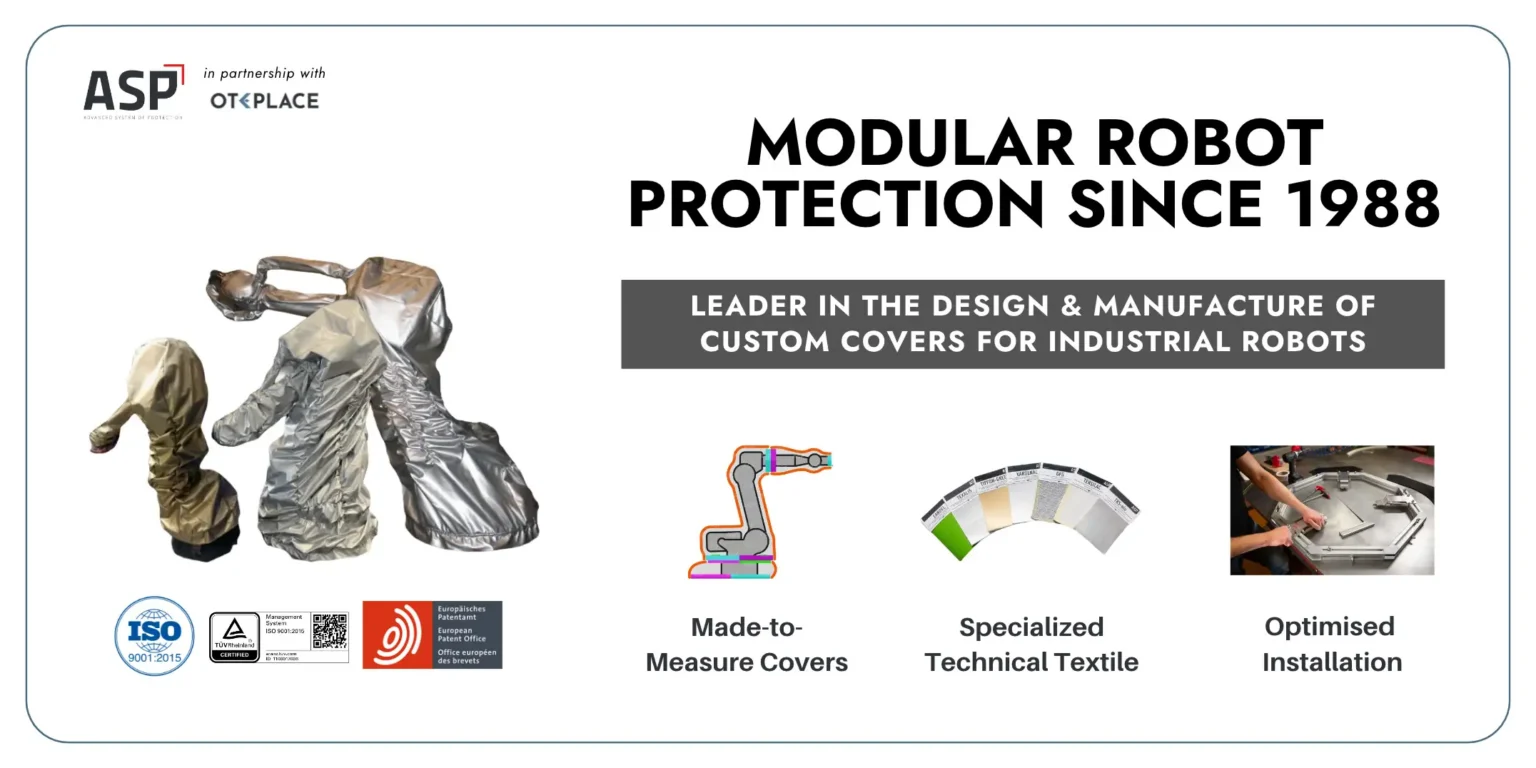
OTEPLACE is the official distributor of ASP (Advanced Systems of Protection) in Asia. ASP is a French manufacturer that has specialized in custom protective covers for industrial robots and cobots, designed for welding, painting, foundry, chemical, food processing and other demanding applications.
As ASP’s Asian distributor, OTEPLACE gives manufacturers in the region direct access to ASP’s full range of robot covers, along with local support for selecting materials, defining specifications and placing orders.
Where we are present
OTEPLACE supports ASP customers across Asia, with local presence in:
- India
- South Korea
- Thailand
- Taiwan
- China
Whether you’re looking for ASP robot covers in India, a robot cover supplier in Thailand or South Korea, or custom robot protection in Taiwan or China, our team can help you evaluate your application and find the right cover for your equipment.
Contact us at [email protected] to discuss your application or request a quote.
What is an industrial robot cover?
An industrial robot cover is a protective jacket that fits over a robot arm to shield it from heat, paint, dust, chemicals and moisture without restricting its movement.
Why do manufacturers choose custom robot covers over standard ones?
No two production environments are the same. One robot might weld car parts while another handles food processing, pharmaceutical production or electronics assembly, and each faces different hazards. A custom cover is built around the robot’s specific application and movement, so it protects the areas that need it without limiting motion.
What hazards can a custom robot cover protect against?
Robot covers can protect against heat, sparks, welding spatter, chemicals, moisture, abrasive dust, paint overspray and other contaminants.
Who distributes ASP robot covers in Asia?
OTEPLACE is the official distributor of ASP robot covers in Asia, serving customers in India, South Korea, Thailand, Taiwan and China.